Soulthing — Designing an
At-Home Wellness Ecosystem from Zero to One
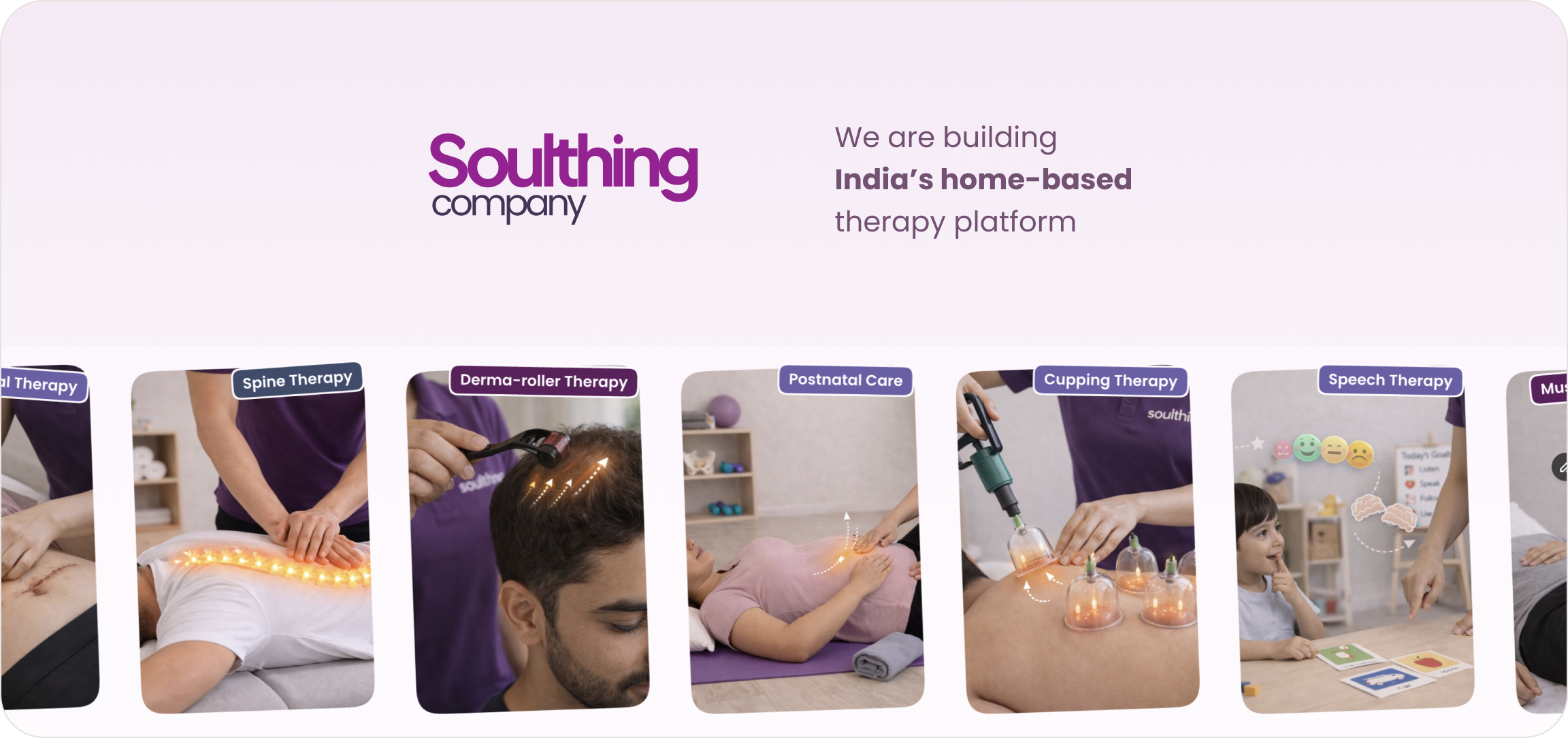
Soulthing began with a simple but powerful question from founder Aditya shivpuri from Haridwar:
“Why should good therapy and wellness be stuck inside clinics when healthcare can come home?”
India's wellness market was flooded with spa booking apps, but none solved the operational complexity of sending trained, verified practitioners into users' homes for multi-session therapy.
Working directly with founder Aditya Shivpuri from Haridwar, my role was to shape Soulthing from zero to one — defining the product ecosystem, booking architecture, therapist workflows, and customer experience.
The Challenge
Building Soulthing wasn't just about creating a sleek Booking app. We were designing an entire operational system for high-trust, home-delivered care.
Unlike standard e-commerce, home therapy involves real human safety, scheduling dynamics, practitioner logistics, and recurring sessions.
We had to answer questions like:
- How do we build trust before a stranger enters a customer's home?
- How do we design an onboarding flow that collects medical preferences without friction?
- What happens if a practitioner is late, assigned incorrectly, or faces safety concerns?
- How does the system handle multi-session packages, rescheduling, and cancellations seamlessly?
- How do we scale therapist allocation without exploding operational overhead?
- How do we ensure quality control across different service categories (physiotherapy, massage, mental wellness)?
- How do we balance customer convenience with therapist safety and fair payouts?
Every product decision affected logistics, operations, customer support, and business growth.
My Role
Product Design
- Product Strategy
- UX Research
- User Experience Design
- Information Architecture
- Design System
- High-Fidelity UI
- Interactive Prototypes
- Product Documentation
- Feature Prioritization
Beyond Design
- Product Structure Planning
- Booking Workflow Architecture
- Backend Logic Mapping
- Therapist Journey Design
- Customer Journey Design
- Operations Workflow
- GTM Strategy Workshops
- Scalability Planning
“This project needed me to think like a Product Designer, Product Manager, and Systems Designer all at once.”
Understanding the Ecosystem
Before jumping into screens, we first mapped the full ecosystem. We broke the platform into several connected parts:
- Zone allocation
- Travel buffers
- Payout tracking
Major Challenges

1. Designing Trust Before the First Session
Sending practitioners home requires extreme safety and confidence. We built verification badges, detailed bio cards, background-check seals, and upfront service protocols.

2. Building a Real Operational Booking Engine
Time slots had to account for therapist travel time, geographic zoning, buffer windows, equipment setup, and practitioner skill matching.

3. Creating Two People at Once
Designing simultaneously for the customer who wants zero friction and the therapist who needs clear schedules, route maps, earnings breakdown, and safety controls.

4. Standardizing an Offline Service
Converting open-ended wellness & therapy consultations into standardized digital package items with transparent pricing and clear expectations.
5. Multisession Therapy Packages
Designing continuous care plans where customers can track session progress, reschedule single slots without breaking package validity, and rate individual therapist visits seamlessly.
Beyond UI Design
Great product design goes far beyond visual screens. Before touching Figma components, we mapped out core functional specifications, system logic, and operational architecture.
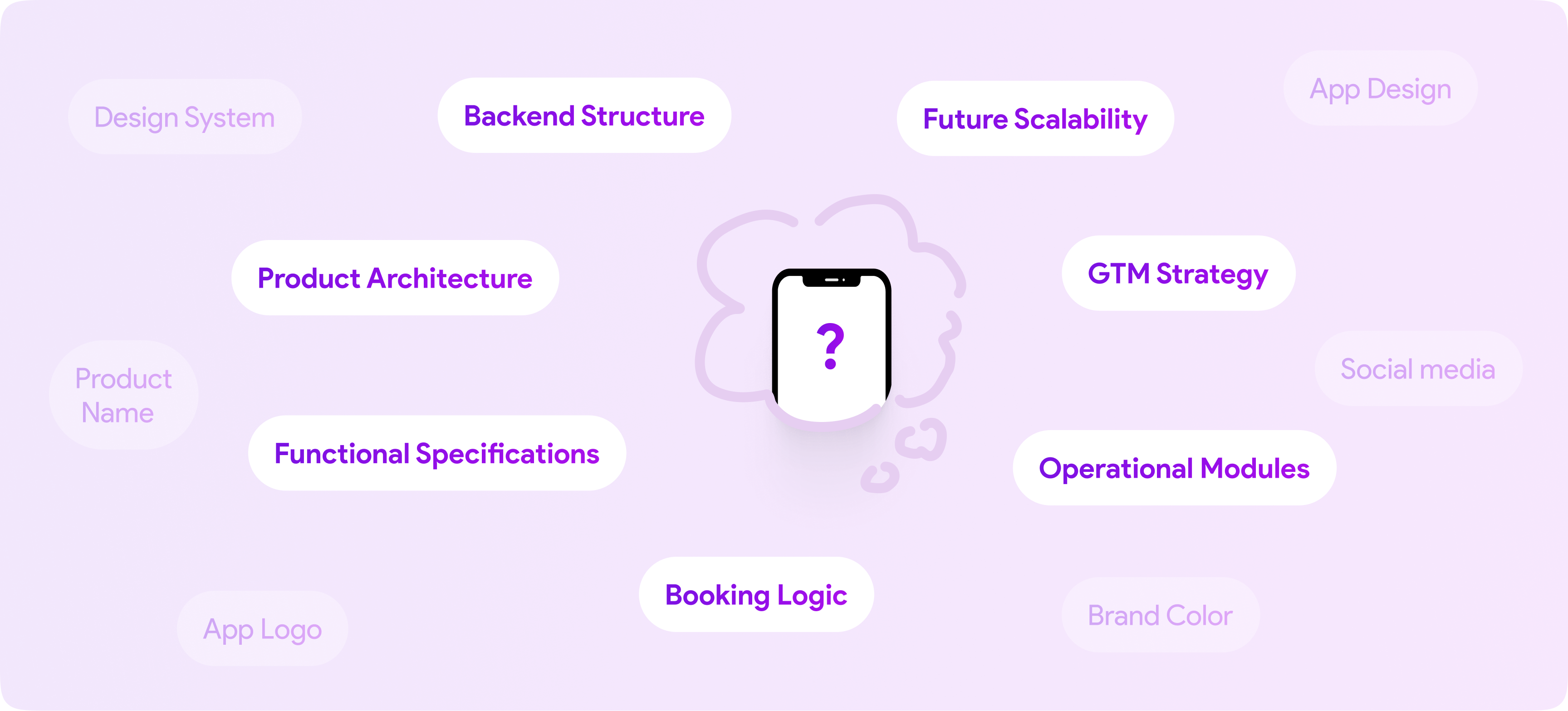
“Because we know if we crack this, than next thing will become more ease to achive”
What Next??
With the ecosystem mapped and core operational challenges framed, we transitioned into full execution.
We began by analyzing competitive benchmarks, building detailed user personas, and crafting end-to-end customer journey maps.
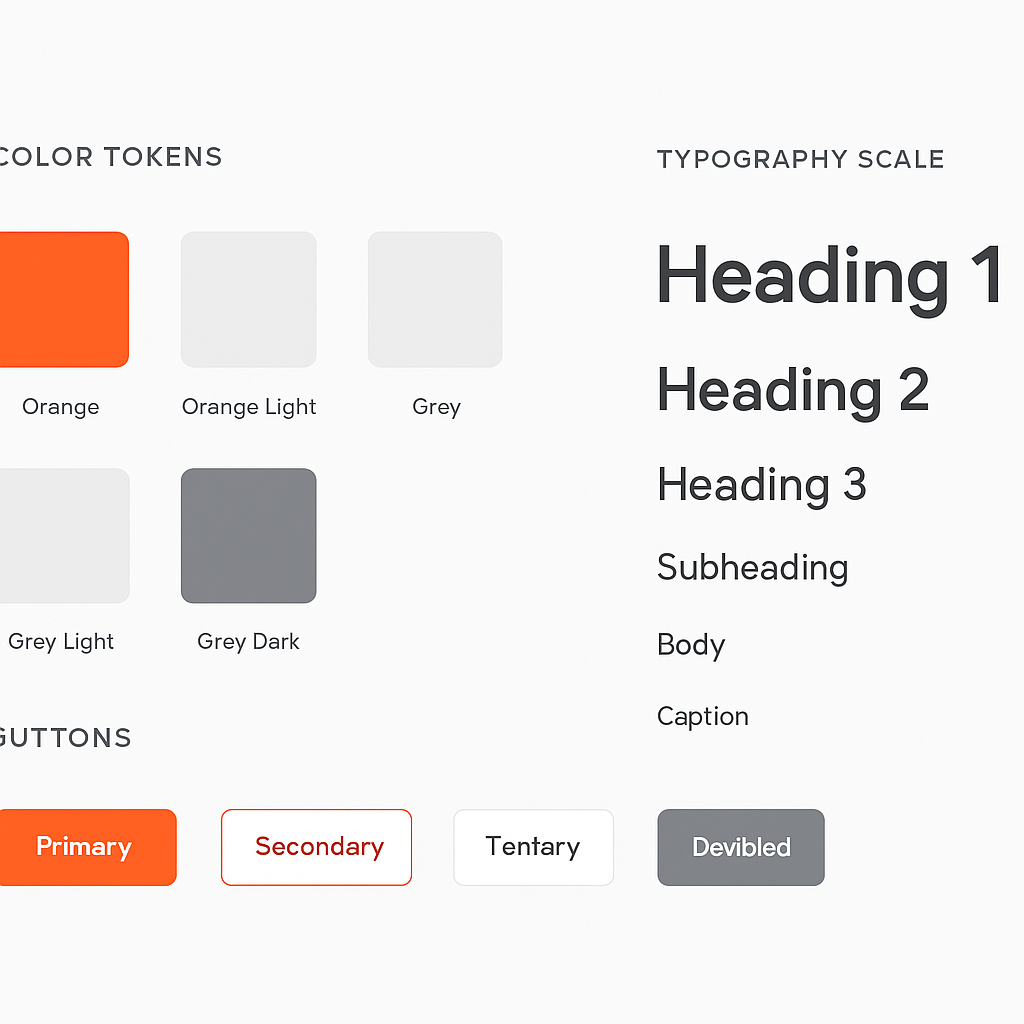
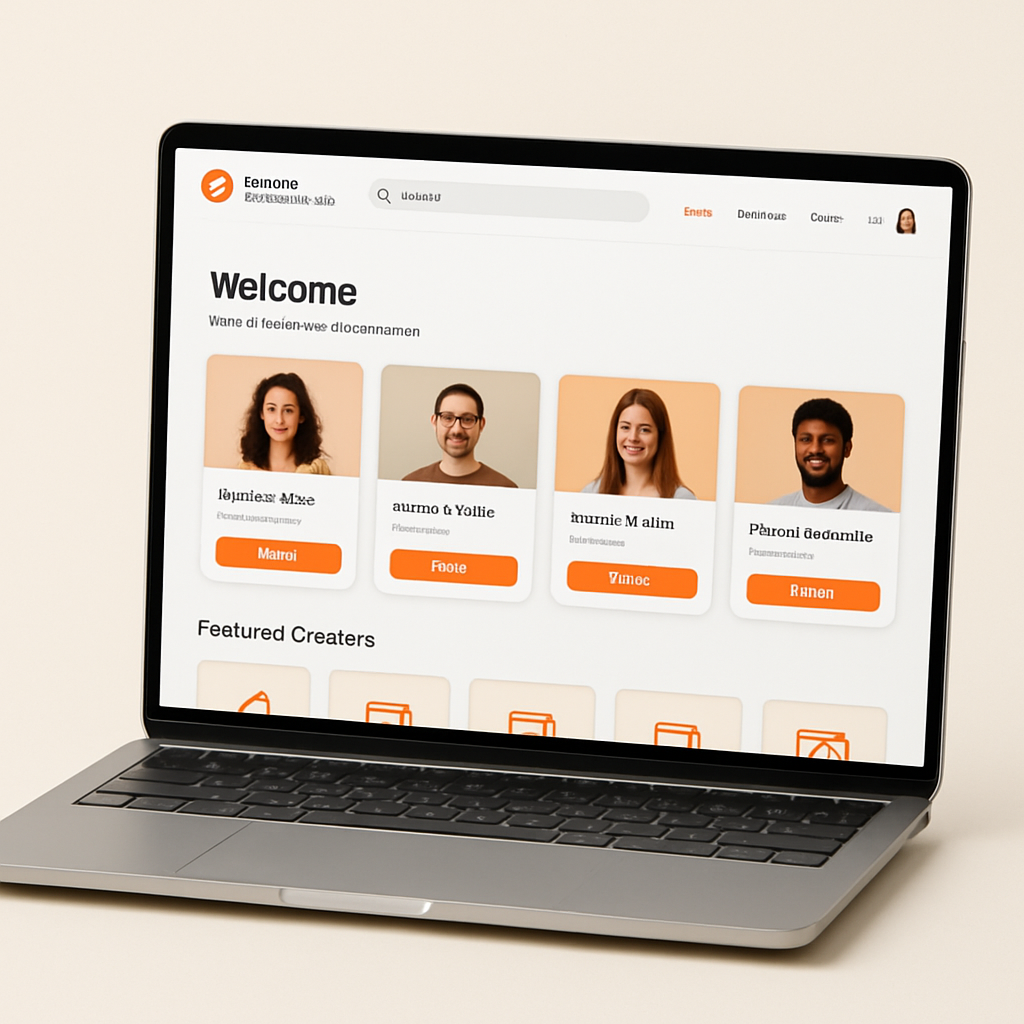
From there, we structured high-fidelity wireframes, established a modular design system, and refined every interactive flow.
Here is a preview of the research, structural wireframes, and final production screens built for Soulthing:
Compititors
Competitor Audit & Market Benchmark Analysis
User Jouney
Customer & Therapist End-to-End Journey Architecture
Wireframes
Structural Low-Fidelity Layouts & Booking Mechanics
Final Mock Designs
High-Fidelity Production Screens & Design System
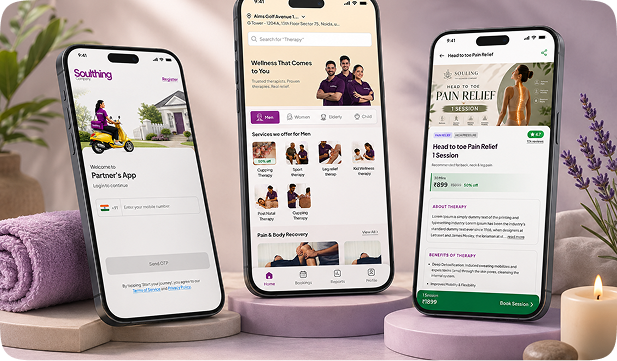
“Every screen was built on top of a well-defined product strategy not just visual design, ensuring the experience was intuitive, scalable, and ready for real-world implementation.”
Outcome
Soulthing evolved from an ambitious concept into a fully architected, investment-ready product ecosystem. The design framework provided clear operational blueprints for both customer-facing applications and therapist dispatch systems.
The structured approach enabled the engineering team to build with confidence, reducing post-launch rework and establishing a high standard for home wellness care in India.
Key Takeaway
Great product design is not only about making things look good — it is about architecting the hidden mechanics that make a complex service feel effortless.
By designing for both sides of the marketplace (customers and therapists) and aligning product architecture with real operational constraints, Soulthing established a foundation for sustainable scale.
Taking a product from zero to one requires a mindset that bridges business strategy, system thinking, and pixel-perfect UX execution.